

Courgettes
- thesquareroot1
- Mar 3
- 3 min read
Courgettes (AKA Zucchinis) are up to 95% water, very low calorie and nutrient dense. So if you do like these in your food you can get 30-35% of your daily vitamin C requirement from as little as 100 grams (0.22 Lbs) as well as magnesium, folate, potassium, phosphorus, vitamins A and B6, leutin and zeaxanthin!

Growing courgettes
Sow courgettes from March - early May under cover. You can sow direct from may if it is warm, usually USDA zones 8 and above. Unlike other plants, courgettes will typically keep cropping for between 3-4 months, usually - September


What do do
Sow seeds from Jan (USDA zones 10 - 13), February to late -March for other zones. For more info on USDA zones see our blog post.
Once you have your seedlings with 2 true leaves pot them on individually in pots 7 - 8 cm wide and keep under cover until your last frost date as the plants are not hardy.
After the last frost risk and the temperature heats up (late May) plant outside 45 - 60 cm (18 - 24 in) apart. Or 1 per 30 cm for square foot planting depending on the variety.
Peppers prefer lighter, free draining soil with a neutral pH at around 6-7, similar to tomatoes and sweet peppers.
Position in a sunny spot or sun trap, sheltered from the strong winds as the the plants can be delicate.
Select a variety that is suitable to your local climate or growing space, see below for cool climate varieties.


Chilli plants are self fertile and self pollinating, meaning the plant has both the male and female parts for pollination and they don't need other plants to produce their fruits.
Small space, no worries!
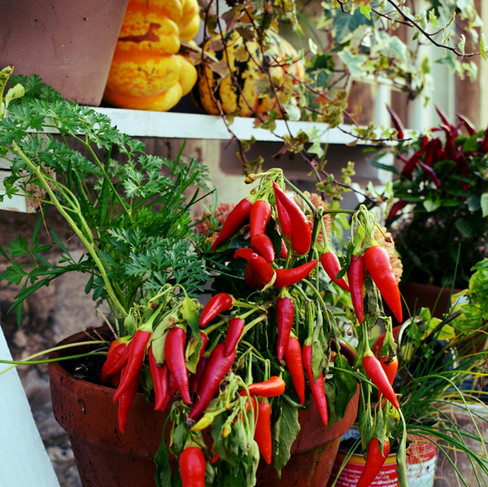
The most widely available mini but high cropping varieties are Apache and Basket of Fire. We'd also like to throw in Pretty in Purple (AKA Buena Mulata) and the trailing Super Chilli.
Standout small variety: Pretty in Purple has darker red/purple leaves and puts on a show with multi-coloured fruits. This ranges from 4,00- to just over 50,000 SCU.



Biggest cropper
Some of the heaviest cropping varieties include Apache, Dorset Naga, Super Chilli and many Birdseye varieties.
Standout heavy cropper: Super Chilli is very versatile and very aesthetically pleasing as it trails in pots, window boxes and hanging baskets. Super Chilli has quite a bit of spice at 80,000 - 100,000 SCU. If you prefer a milder variety opt for Apache.
Culinary use
Best for hot sauces: Habanero, Jalapeno and Serrano
Best for roasting and toppings: Jalepeno is a thick walled variety making it a great choice for a variety of dishes. Habanero and Mulato add a fruity flavour.
Best for salsa and pickling: Hungarian Wax varieties, Jalapeno and Cherry Bomb.
Best for a curry or chilli dish: Birdseye, Indian Finger and Jalapeno
Standout culinary variety: Jalapeno is a very diverse chilli with a sweet and mild kick. However, if you don't like the milder varieties like me, opt for Habanero for the fruity notes and big spice kick.


Cooler climates
There are specially bred varieties for people in colder areas the Bulgarian Carrot and Hot Wax. Early Jalapeno and Manzano.
Standout Variety: The Spanish Manzano is cool tolerant and grows well in shaded areas making it a very strong contender for cooler and cloudy summers. It is slightly hotter than the Jalapeno at 12,000 - 30,000 SCU.
Early varieties - Under 70 days: Bulgarian varieties (some Bulgarian Hot Wax's are mid season so check the label), Early Jalapeno, Manzano
Med-season - approx 70 - 89 days: Apache, Cayenne, Jalapeno and Super Chilli
Later varieties - 80 - 100 days: Birdseye and other tropical chillis. If you are in USDA zones 10 or higher they will do better due to the heat and potentially become a reliable mid-season cropper.
TIP: For cooler areas try to position chilli plants in a walled suntrap or inside a greenhouse/ poly tunnel to increase the warmth and growing season.


Comments